Artificial intelligence - ChatGPT: advantages, drawbacks and best practices
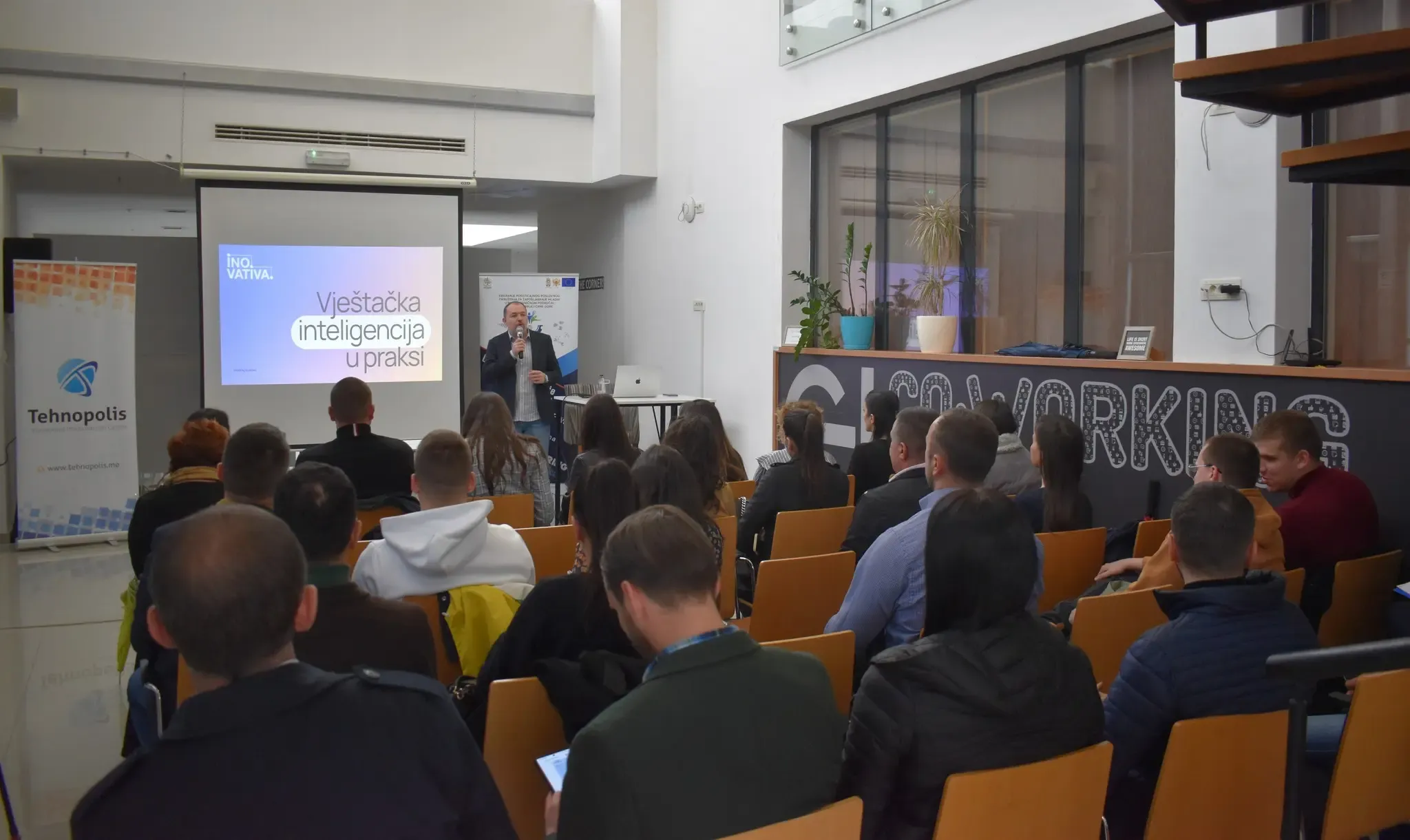
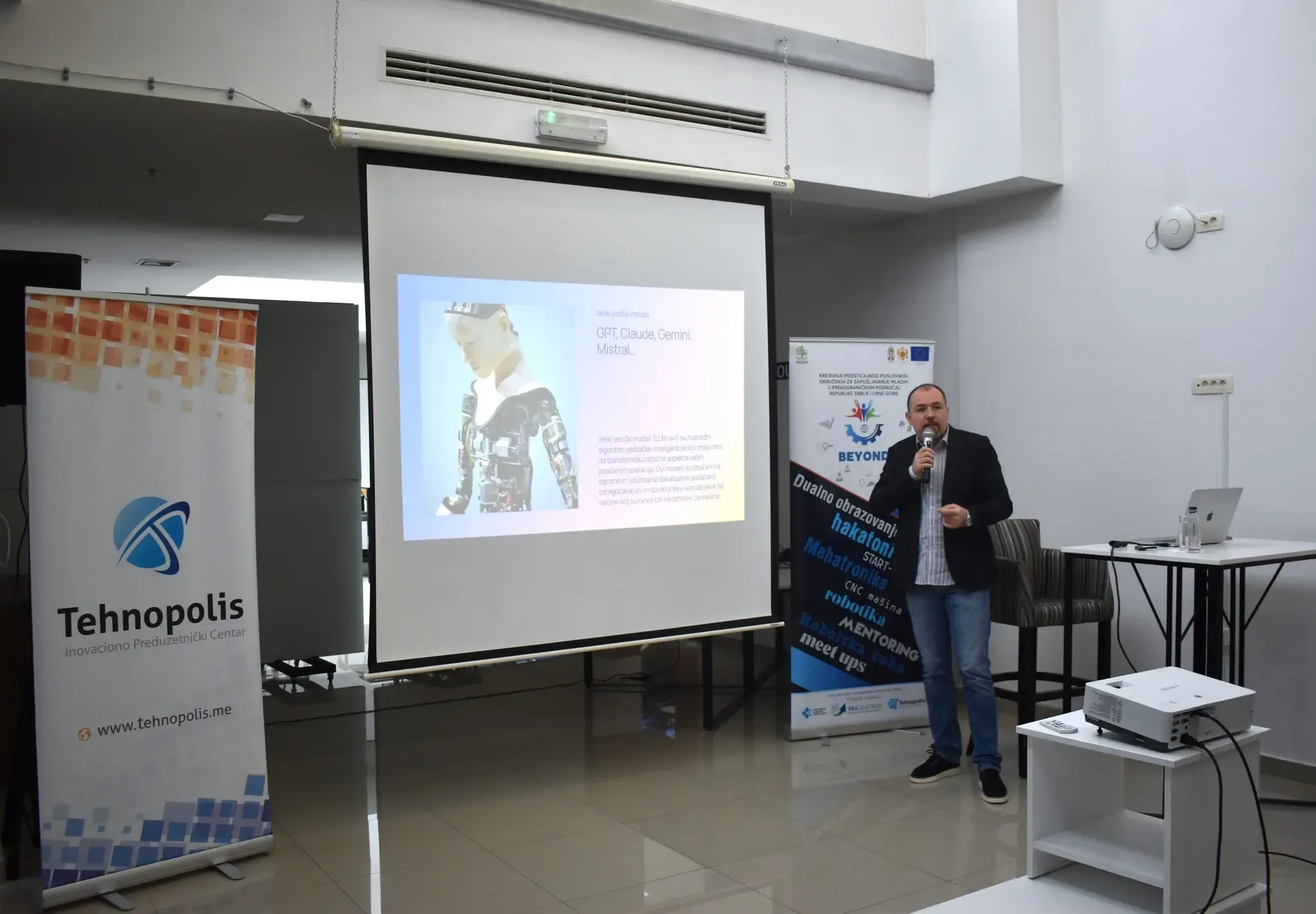
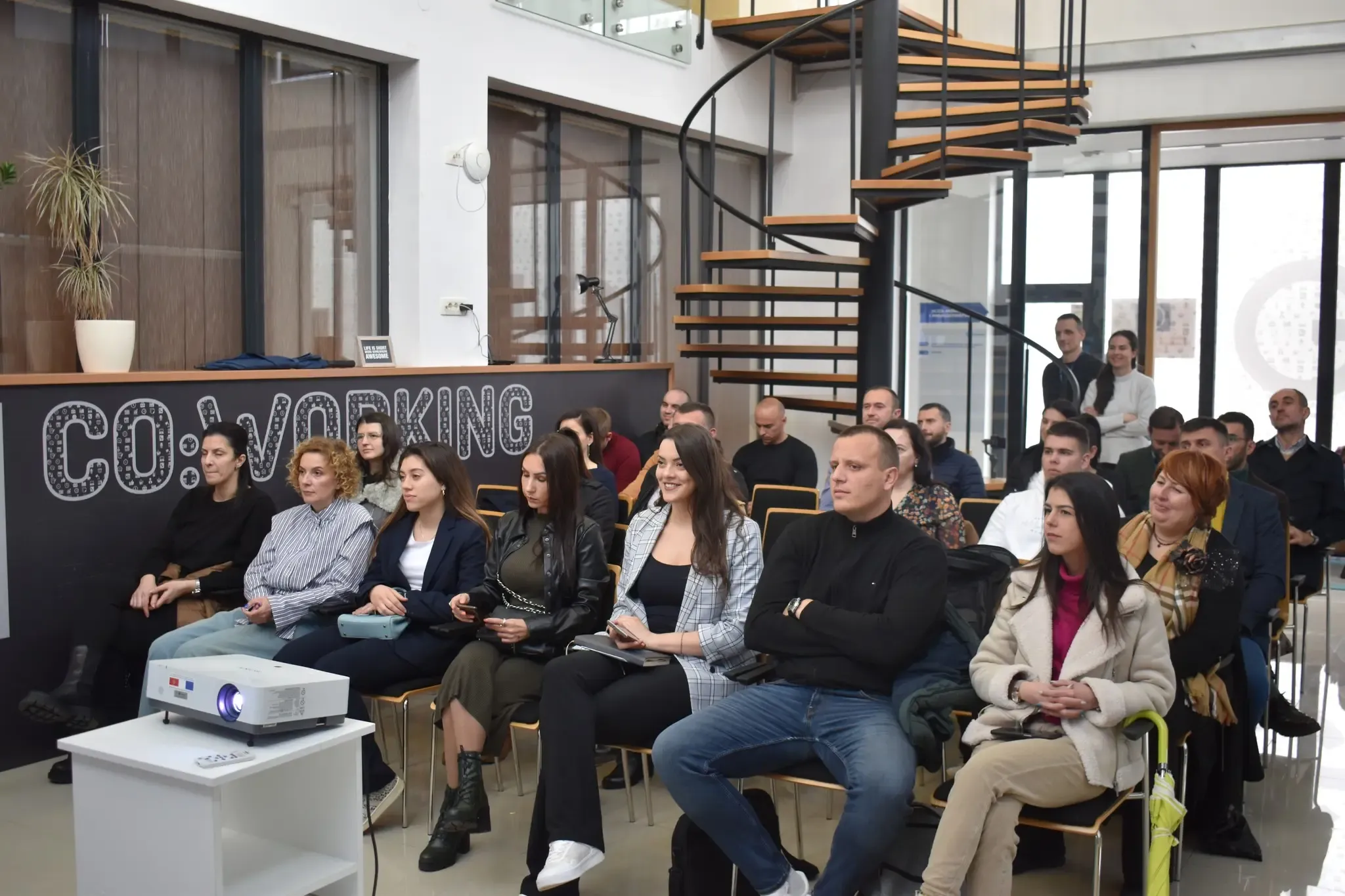
Last month my colleague Savo Vujisić and I attended a presentation about ChatGPT (opens in a new window), an artificial intelligence (AI) tool that is changing the way we think about technology, and about the world around us in general. The presentation was held at Tehnopolis in Nikšić, and the speaker, Miodrag Vujković, took us through the development and history of AI, the many possibilities it offers, his own experience, the fields where it is already applied or could be, and the situations where mistakes happened because AI was trusted blindly.
My goal was to understand more deeply how ChatGPT and AI work, where they can be applied and what impact they can have on our everyday life.
In this age of technological progress, AI is becoming ever-present in every part of our lives, from households to workplaces. While AI brings many benefits such as efficiency, automation and improvements in every sphere of life, we also see growing concern among the working population about the future of employment.
The speaker highlighted several key points that could calm people’s fear of losing jobs to AI. First, he stressed that only 25% of all jobs in the world are currently digitised, which tells us that although technology is advancing in big steps, there is still a huge number of jobs that require physical presence and a human touch, which cannot be replaced. The second interesting point concerns the energy consumption tied to AI. For example, generating a single image with AI takes the amount of energy we use to charge a mobile phone from 0 to 100%. Taken into account, it becomes clear that replacing a human with AI may not pay off for business owners because of the high energy costs. The most important thing the speaker stressed is that no matter how far AI technology advances, there is always a need for human oversight to ensure the accuracy and relevance of the results. The human capacity for judgement, creativity and empathy is something AI, at least in the near future, cannot replace.
These points give us reason for optimism about the future of human work in the AI era. Although technological progress inevitably changes how we work, it is clear that the human factor remains irreplaceable in many respects. Instead of focusing only on the potential threats AI poses to the labour market, it is important to recognise the value that human intelligence and creativity bring. By combining the best of both worlds, we can aim for a future in which technology and people work together to create a better and more efficient society and world. I learned that ChatGPT is not just a text generation tool; it is a platform that can transform how we learn and work, and generally make our lives easier.
Here are a few examples of how AI can make business easier:
-
Automating administrative tasks
It can take over routine and tedious administrative tasks, such as scheduling meetings, handling some emails and keeping records, freeing workers for more complex tasks that require human intervention.
-
Analysing large amounts of data
It can analyse enormous amounts of data faster and more accurately than human capacity allows, providing valuable insights that help in making informed decisions.
-
Improving customer support
AI-based chatbots can handle basic customer enquiries 24/7, giving quick answers and improving customer satisfaction, while human operators can focus on more complex customer problems.
Its application in education, in particular, opens the door to personalised learning in ways we are only beginning to understand. Although fear of the unknown is understandable, it is important to recognise the potential opportunities AI can bring. New technologies can create jobs that do not exist today, opening the door to unexplored fields of work and innovation. The main challenge lies in identifying the best ways to integrate AI so that the technology serves as a tool that enables rather than limits. Through proper implementation and continuous improvement, AI can be a key player in shaping a future of business that is more efficient, more productive and more innovative.