
AI in art and design - creative partner or threat?
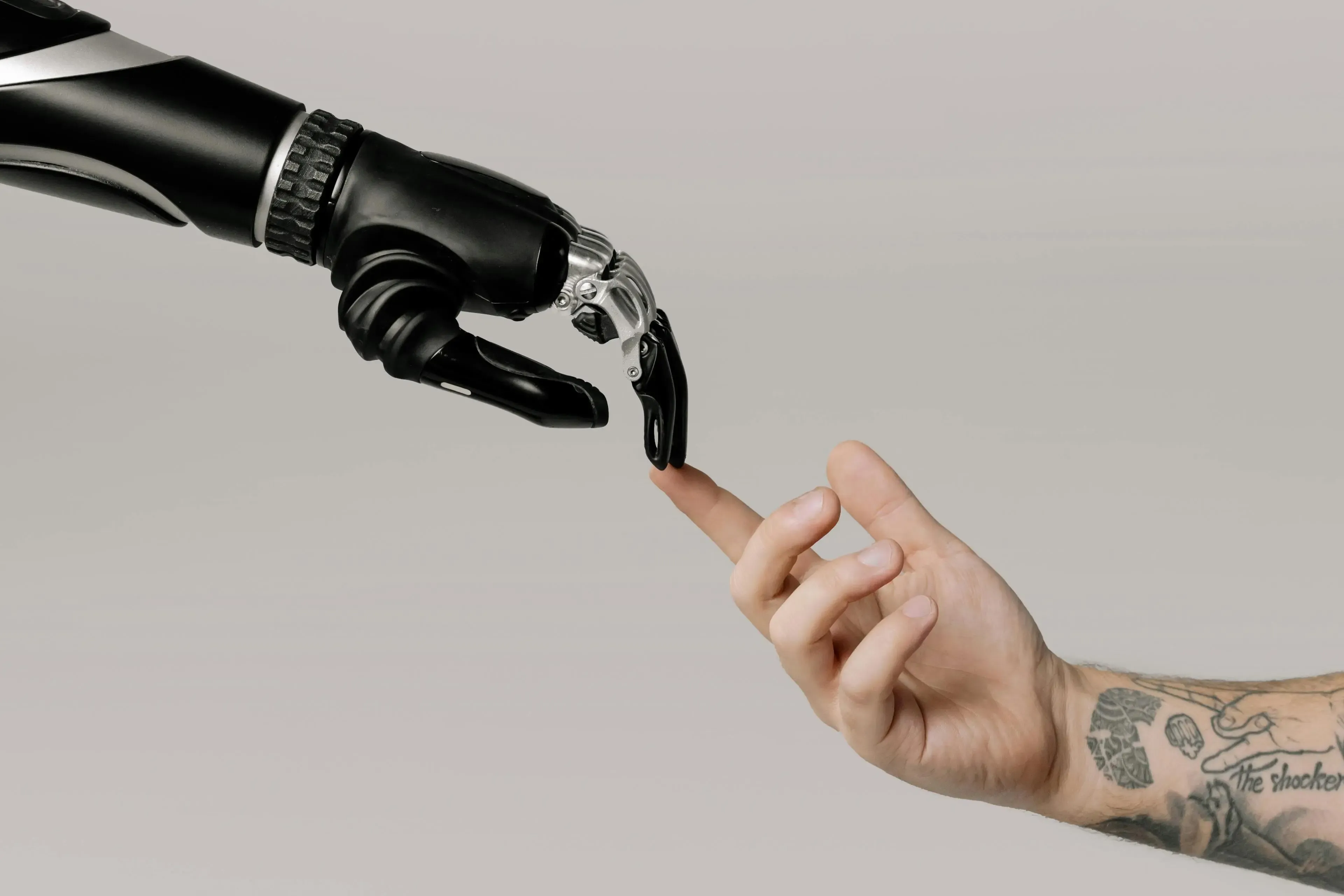
The world of graphic design is changing faster than ever. The arrival of artificial intelligence (AI) in the creative industry brought a new wave of innovation, but also questions: will designers become unnecessary, or will AI be their strongest tool?
Artificial intelligence can today generate logos, colour palettes, mockups and a complete visual identity campaign in a few minutes. Tools such as Adobe Firefly, Midjourney and Figma AI let designers:
- Test more creative directions faster
- Generate realistic visuals without expensive photo shoots
- Personalise design for the target audience in real time
For companies, AI means saving time and money, but also the ability to test visuals before production even starts. For example, a fashion brand can create dozens of versions of a campaign and test the audience’s reaction on social media before the final release. Here are a few examples of successful AI use from the worlds of fashion, business and art:
Nike By You Nike uses AI to let customers personalise their sneakers. The AI analyses preferences for colours, patterns and materials, but designers set the creative boundaries so the brand keeps its identity.
Coca-Cola – the “Create Real Magic” campaign Coca-Cola let users create their own ads with AI tools, using brand elements. Although the AI generates the content, the brand team still approves and shapes the final messages.
Mastercard and visual identity Mastercard uses AI to test different versions of its visual identity on focus groups in real time. The AI measures the audience’s reactions, but the decision on the final design is made by the design team.
Restoring works of art AI is used to reconstruct damaged frescoes and paintings, because it can predict the original colours and shapes. However, the decision on how the work is interpreted is made by restorers, not the algorithm.
Refik Anadol The Turkish artist uses AI to process terabytes of data and turn them into immersive digital installations. His work has been shown at MoMA in New York, which shows that AI can be a tool of high artistic expression, but behind it all there is still a person with a vision.
Dangers and ethical questions
However, AI in design also opens serious topics:
The question of originality – where is the line between inspiration and copying?
Artificial intelligence brought incredible speed and efficiency to the creative industries – but with it comes a serious question: how original is the generated content, really? Most AI tools for generating images, video or text are trained on enormous databases from the internet – photographs, designs, works of art and visual elements made by real people. AI can combine elements and create something “new” in a few seconds. The problem is that the result is often a derivative of something that already exists, which raises the question of whether it is truly original work.
When AI generates a “new” painting in the style of Van Gogh, it is not original – it is an imitation based on patterns from his works. The question of copyright – who owns a visual generated by AI?
The question of copyright and ethics
If AI uses other people’s work in its learning process, does that make the new works plagiarism? The laws are still unclear, which leaves room for abuse. AI can “create” a dress that resembles a model from last year’s Dior collection, but without the designer’s approval. AI can replicate typography or a logo that resembles a brand, without a licence.
This can lead to legal disputes, so more and more companies demand that AI models be trained only on licensed or their own data.
Losing the “human touch” – will design lose its authenticity?
In a world where AI can generate a logo, a website or a complete marketing campaign in a few minutes, a key question arises: will design lose what makes it truly authentic – the human touch?
The human touch is not only drawing by hand or using a pencil instead of a mouse. It is the set of emotions, experiences and intuition a designer brings to the work, personal stories, cultural and local context, empathy for the audience and an understanding of their needs, and sometimes deliberately breaking the rules for the sake of artistic expression.
AI can replicate technique, but it cannot feel. It does not know why a certain colour stirs nostalgia, or how a certain shape can convey a sense of safety.
As AI tools become available to everyone, there is a real danger that design becomes too generic. AI prefers aesthetic patterns that are already statistically “successful”, and all work starts to look alike. Companies lose differentiation because they use the same prompts and the same models. The room for “imperfections”, which often give design its character and warmth, disappears. For example, the early Instagram feed was full of similar minimal flat designs, because everyone used the same trends from Canva templates, which resulted in visual fatigue in the audience.
A brand’s key value is authenticity. Authentic design feels “alive” because it carries the stamp of the person or team behind it. In fashion, hand-embroidered details, imperfect seams or a unique print are worth more than mass-produced pieces. Every piece of Chanel Haute Couture goes through hours and hours of handwork. Beads, embroidery and lace are made in small Parisian workshops (Métiers d’Art). AI can generate a pattern, but it cannot replicate the feeling and value of a piece ten people worked on for weeks. Dior’s famous Toile de Jouy print is adapted by hand for each collection, sometimes with unique motifs. Although AI can create a similar pattern, buyers value the fact that the design was conceived and refined by specific artists.
In graphic design, illustrations that carry an artist’s personal style create a recognisability AI can hardly imitate. Malika Favre is a French illustrator known for a simple but bold style and a pronounced use of negative space. Her illustrations for The New Yorker are instantly recognisable and carry her signature – AI can imitate, but it cannot be “Malika Favre”. Masaaki Hiromura’s pictograms for the Tokyo 2020 Olympic Games are minimalist, yet carry a strong personal stamp of the author, which makes them recognisable worldwide. AI could replicate the style, but not the process of creative decision-making behind each sign.
Salvador Dalí’s illustrations and paintings carry a recognisable madness and humour that is impossible to replace. An AI illustration “in the style of Dalí” often mixes his motifs (clocks, the desert, figures) in new combinations, but without the deeper symbolism Dalí consciously built through his work.
Patek Philippe assembles every watch by hand, and its craftsmen go through years of training. That means the buyer gets not just a product, but a piece of family heritage. No AI design can replace the feeling that the watch you wear carries the signature of the craftsman who finished it by hand. Although Rolex uses modern technology in production, the finishing details such as polishing the case or setting the hands are done by hand, so that every piece passes strict human quality control.
If AI is used without human oversight, design can become generic and stripped of authenticity. On the other hand, ignoring AI means losing the competitive edge in speed, innovation and adaptability to the market.
The best results come when the designer controls the AI, not the other way round. AI can speed up the technical part of the work, but human creativity, understanding of context and an emotional connection with the audience remain irreplaceable.
The design of the future will be neither purely human nor purely machine — it will be a hybrid. Designers who accept AI as an extension of their creativity, rather than a threat, will be the ones shaping the visual world of the coming decades.
AI will not replace good designers – it will only replace those who do not use it. In 2025 the winner is still the one who knows how to combine technology and creativity, and the brands that understand this in time will be a step ahead of the competition.